
Most businesses lose money in small, repeated ways. A customer asks the same question your team has answered a hundred times before. A lead fills out a form and sits in an inbox for two days before anyone follows up. A support agent spends half their shift on things a system could have handled in seconds.
That's a structural problem more than a staffing one, and AI chatbots are one of the most practical ways to fix it.
The chatbot market has grown past $11 billion globally, with adoption highest among e-commerce, SaaS, and service businesses, according to Grand View Research's 2026 chatbot market report. Trendiness doesn't explain that kind of growth. The math does.
What an AI chatbot actually does now
Forget the chatbots of a few years ago. They matched exact phrases, and the moment a customer worded something differently, the conversation fell apart. Today's are a different class of tool.
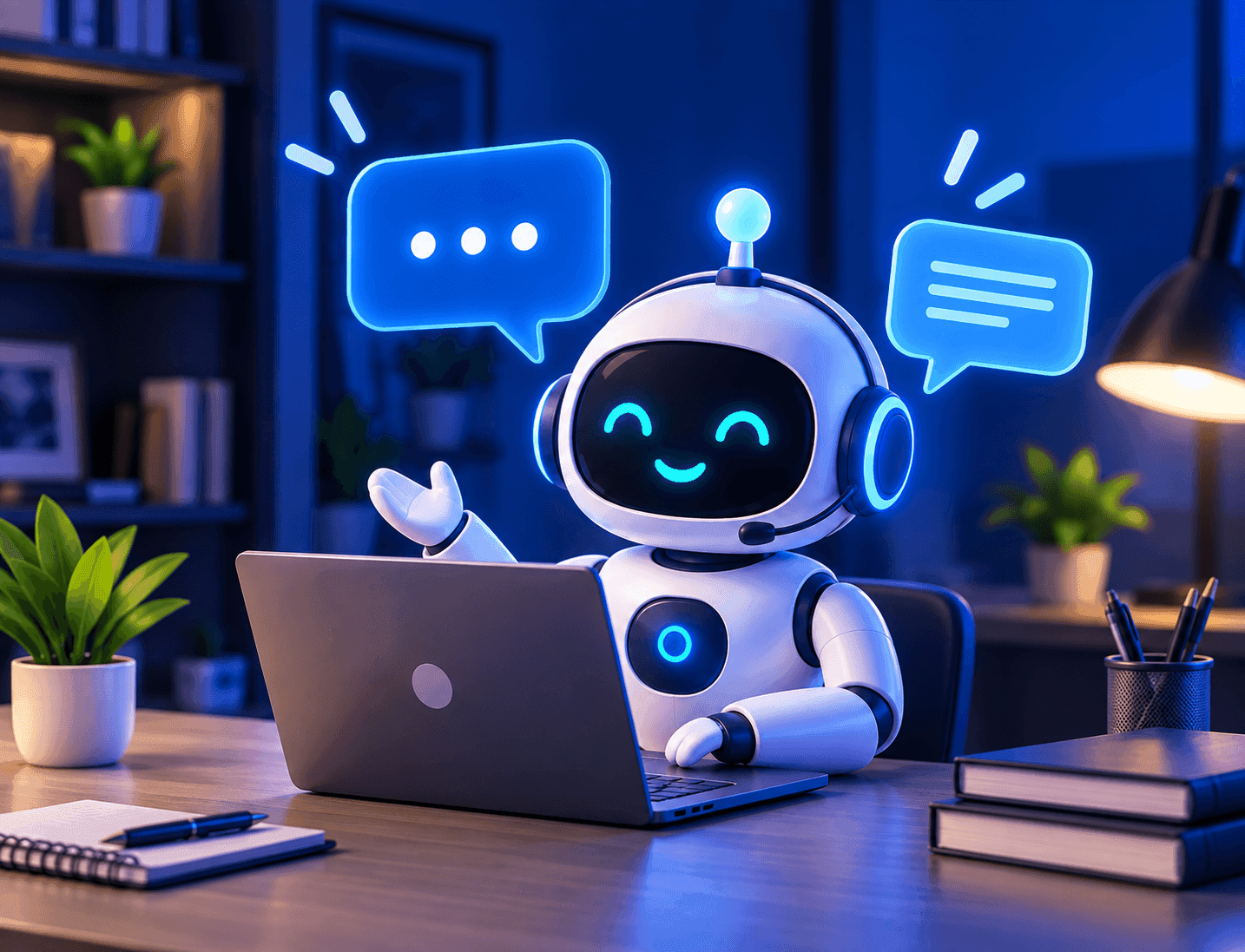
A modern AI chatbot understands what the customer means, whatever words they use. It can hold a multi-step conversation, remember what was said earlier in the chat, and pull real answers straight from your CRM or support system. It also knows when it's out of its depth and hands the conversation to a person, with the full context already attached.
That last part matters more than people think. A chatbot that knows when to step back is worth far more than one that tries to handle everything.
Where the time savings actually come from
Most customer inquiries aren't complicated. They're repetitive. "What are your hours?" "Where is my order?" "Do you offer refunds?" Nobody needs a human for those. They need a fast, accurate answer.
When a chatbot absorbs that volume, your team's time goes to the work that actually needs a person: the upset customer, the unusual request, the conversation that calls for judgment.
Nobody gets replaced. Your people just stop spending their day on questions a system can answer in seconds.
There's also a coverage benefit that's easy to underestimate. A chatbot doesn't work shifts. It answers a customer in another time zone at 2 AM the same way it answers one at 2 PM. For any business with customers outside its own working hours, that alone closes a gap that used to mean lost responses or lost sales.
Where the money savings actually come from
A conversation handled by a chatbot costs far less than the same conversation handled by an agent. Once it's built and trained, a chatbot has no labor cost per conversation, so the more it handles, the lower your average cost per interaction. Human support scales the other way.
The bigger financial impact is usually conversion. When a website visitor can't get an answer quickly, they leave, and most never come back to ask again. A chatbot steps in at that exact moment. Catching the customer before they go, while they're still on the page, is where a lot of the real value sits.
Leads work the same way. A prospect who would have filled out a form and waited gets an immediate reply, the right qualifying questions, and a handoff to sales once the lead is warm and complete. Your salespeople spend less time chasing dead ends and more time closing.
Why this matters more now than it did a few years ago
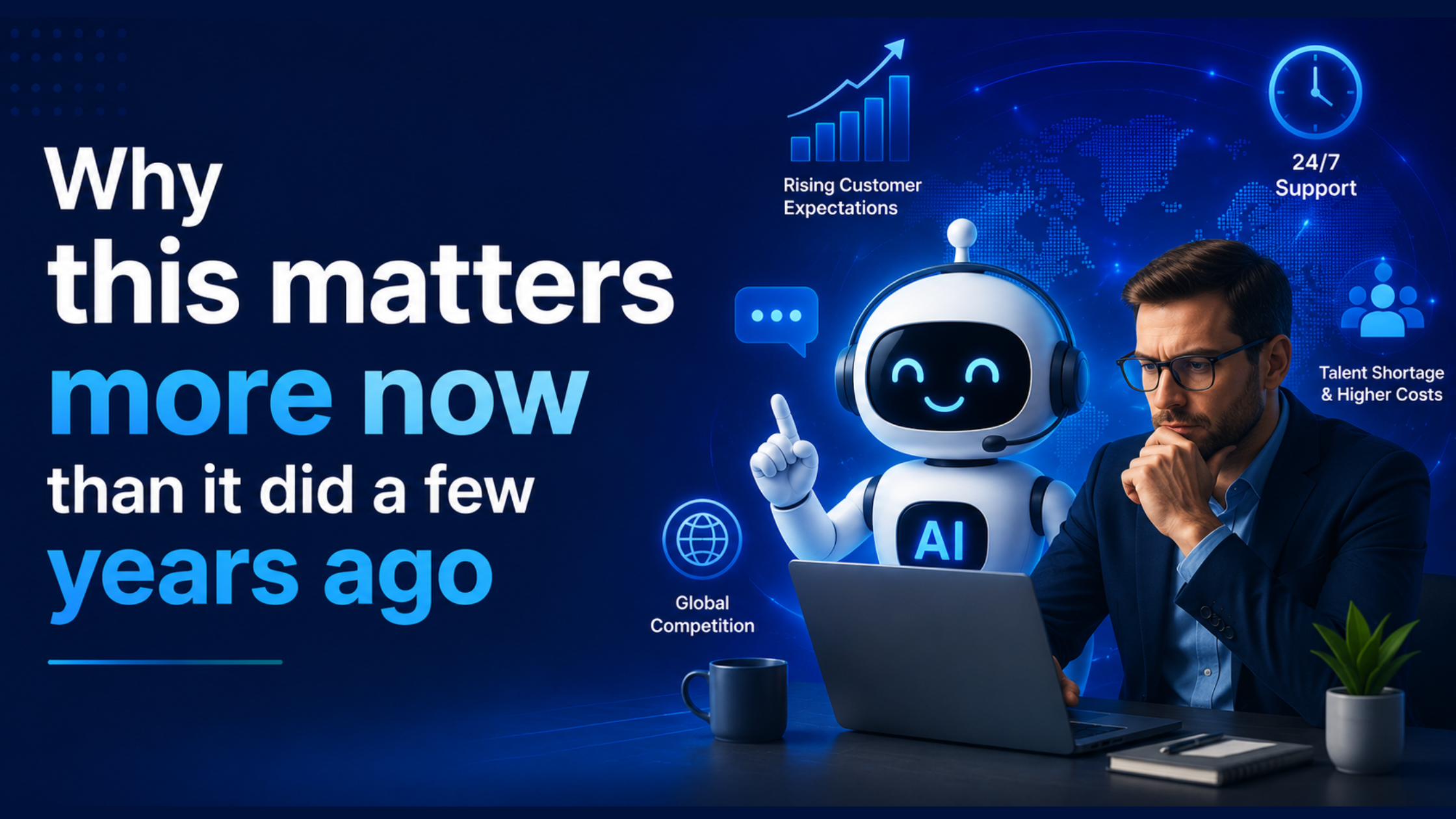
Customer expectations have shifted. People are used to getting instant answers everywhere else in their lives, and they bring that expectation to your business too. A slow response doesn't read as normal anymore. It reads as a business that isn't paying attention.
At the same time, hiring and retaining good support staff has gotten harder and more expensive almost everywhere. A chatbot won't solve every staffing problem, but it takes enough repetitive volume off the queue that the people you do have can do their jobs well, without drowning in tickets.
It's also no longer a big-company tool. Chatbot platforms have become cheaper and easier to deploy, so a small business can now offer the instant, always-on support that used to take a much bigger team.
What to look for before you invest in one
Not every chatbot delivers the results above. The difference usually comes down to how it's built, far more than which platform you pick.
A chatbot trained on a generic FAQ gives generic answers, and customers notice immediately. Train it on your real products, your real support history and the way your business actually talks.
It also needs to connect to the tools you already use (your CRM, your helpdesk, your order system) so it can look things up and get things done. And it needs a clean handoff to a human when a conversation goes past what it can handle. A bot stuck in a loop with a frustrated customer does more damage than having no chatbot at all.
Finally, you need to see what's actually happening: how many conversations it resolves on its own, how satisfied customers are with those answers, and where it still falls short. Without that, you're guessing.
How Flaidex builds AI chatbot solutions
Flaidex has been building digital solutions for clients internationally since 2017, across software development, web and app development, and AI-driven automation.
We don't start from a generic chatbot template. Every project starts by finding where your customers get stuck, where leads go cold, and where your team loses the most hours to repetitive work.
From there, we build and train a chatbot on your business, connect it to the tools you already use, and put reporting in place from day one. You see exactly what it's doing, so you never have to take our word for it.
Want to see what this could look like for your business?
Book a free consultation with the Flaidex team. We'll walk through your current support and sales process, point out where a chatbot would genuinely help, and show you what one built for your business would look like.
Schedule your free consultation
Explore our AI and software development services
Frequently asked questions
How much does an AI chatbot cost for a small business?
Most off-the-shelf chatbot platforms start between $50 and $300 a month. Custom builds are priced on complexity and the integrations involved.
How long does it take to set one up?
A basic chatbot can go live within days. A custom deployment with CRM integration and business-specific training usually takes a few weeks, mostly spent gathering and preparing the information the chatbot needs to learn from.
Will a chatbot replace my customer service team?
No. It takes the repetitive, high-volume questions so your team can focus on the conversations that need a person. The businesses that get the most out of chatbots use both together.
Are AI chatbots secure?
That depends on how it's built. A properly built chatbot should support encryption and comply with data protection rules like GDPR. Confirm this during planning; never assume it.
Can a chatbot connect to my CRM?
Yes. Most modern chatbots integrate with common CRM and helpdesk platforms, so they can pull customer information and log every conversation automatically.
Which kinds of businesses benefit most?
Any business with a steady stream of repeat questions (e-commerce, SaaS, healthcare scheduling, service businesses) sees the clearest results. The common thread is repetition: if your team answers the same handful of questions constantly, a chatbot will save real time.
Can a chatbot help generate leads, not just answer questions?
Yes. A well-built chatbot can start the conversation with visitors, ask qualifying questions and pass warm leads straight to your sales team, with no form and no waiting.
How do I know if a chatbot is actually working?
Watch three numbers: how many conversations it resolves without a human, how customers rate those interactions, and whether your team's repetitive workload has actually gone down. If they aren't moving, something needs adjusting.